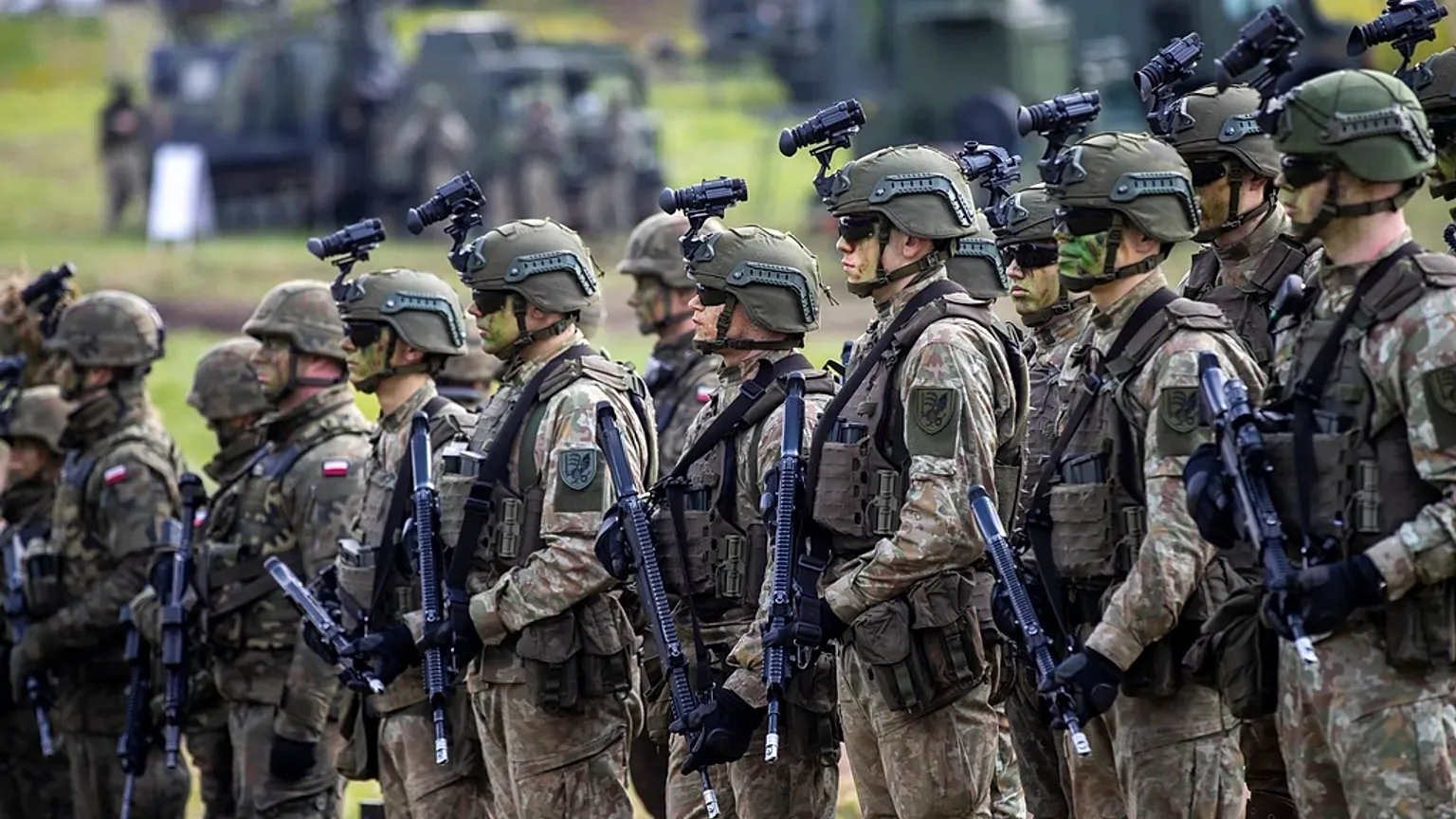
As tensions between the North Atlantic Alliance and the Russian Federation reach a critical threshold, Poland has launched a sweeping security operation along its northeastern frontier bordering the heavily militarized Kaliningrad enclave. This decisive move comes in response to mounting evidence of coordinated provocations, clandestine drone intrusions, and the looming specter of sabotage operations directed from Moscow. The Polish government’s bold initiative signals a fundamental shift in how Warsaw intends to counter Russia’s escalating hybrid warfare tactics on Europe’s eastern flank.
From deterrence to Fortress Poland: the anatomy of a security lockdown
What began as a routine border patrol enhancement has evolved into a multi-layered defense architecture unlike any seen in peacetime Europe. Polish authorities have deployed a synchronized network of elite counterterrorism units, national police strike teams, and regular army battalions, all operating under a unified command structure. The initiative targets two core vulnerabilities:
- Physical infiltration routes: A reinforced cordon sanitaire is designed to seal off potential entry points exploited by Russian-trained operatives or proxy forces intent on sabotage and destabilization.
- Critical infrastructure protection: High-risk assets including power grids, rail corridors, and fiber-optic communication backbones are now under 24/7 military guard to deter kinetic or cyber-physical attacks.
The operation arrives amid a surge in aerial provocations: unmarked drones violating sovereign airspace, suspicious low-altitude flyovers, and abrupt communication blackouts near strategic installations. These incidents have jolted Baltic capitals into a state of heightened alert, with intelligence circles warning that Moscow may be testing the limits of NATO’s collective resolve.
Hybrid warfare’s front row: Poland takes center stage
While global attention remains fixed on the Ukrainian battlefield, Poland’s northeastern border has quietly become the new laboratory for Moscow’s hybrid playbook. From weaponized migration flows funneling through Belarus to coordinated cyber campaigns targeting Polish logistics hubs, the Kremlin appears to be probing for weak links in the Alliance’s eastern perimeter. Warsaw’s defensive surge is therefore not merely precautionary—it is an assertion that Poland will no longer serve as a passive buffer state.
A message carved in steel and concrete
The deployment of advanced radar systems, mobile missile defense batteries, and rapid-response sabotage interdiction teams sends a clear message: any attempt to bypass Poland’s security perimeter will trigger immediate, disproportionate countermeasures. Analysts interpret the move as part of a broader NATO strategy to demonstrate that hybrid aggression carries tangible consequences—even outside conventional war zones. By turning its northeastern frontier into a fortified redoubt, Poland is effectively redrawing the deterrence map of the Baltic region.
What’s next? The long shadow of Kaliningrad
The immediate aftermath of Poland’s security lockdown has ignited a fierce public debate. Critics argue that the militarization of the border risks escalating tensions and accelerating an arms race along NATO’s eastern edge. Supporters counter that inaction would invite precisely the kind of low-intensity warfare Russia has refined in Ukraine: sabotage, disinformation, and calibrated chaos designed to fracture cohesion within the Alliance.
Analysts foresee three likely trajectories:
- Escalation spiral: Further Russian counter-deployments near Kaliningrad, accompanied by a fresh wave of cyber-attacks and disinformation campaigns aimed at undermining Polish domestic stability.
- Diplomatic detente: Back-channel negotiations focusing on deconfliction protocols, drone flight corridors, and mutual verification mechanisms to reduce accidental escalation.
- NATO solidarity surge: Enhanced allied participation in Poland’s defensive architecture, including joint exercises, intelligence-sharing platforms, and pre-positioned stockpiles of critical equipment.
Regardless of the path chosen, one fact is clear: Poland’s fortified Baltic frontier has transformed the region’s security landscape. The question now is whether the rest of Europe will follow suit—or risk leaving its eastern flank exposed to the Kremlin’s next gambit.